
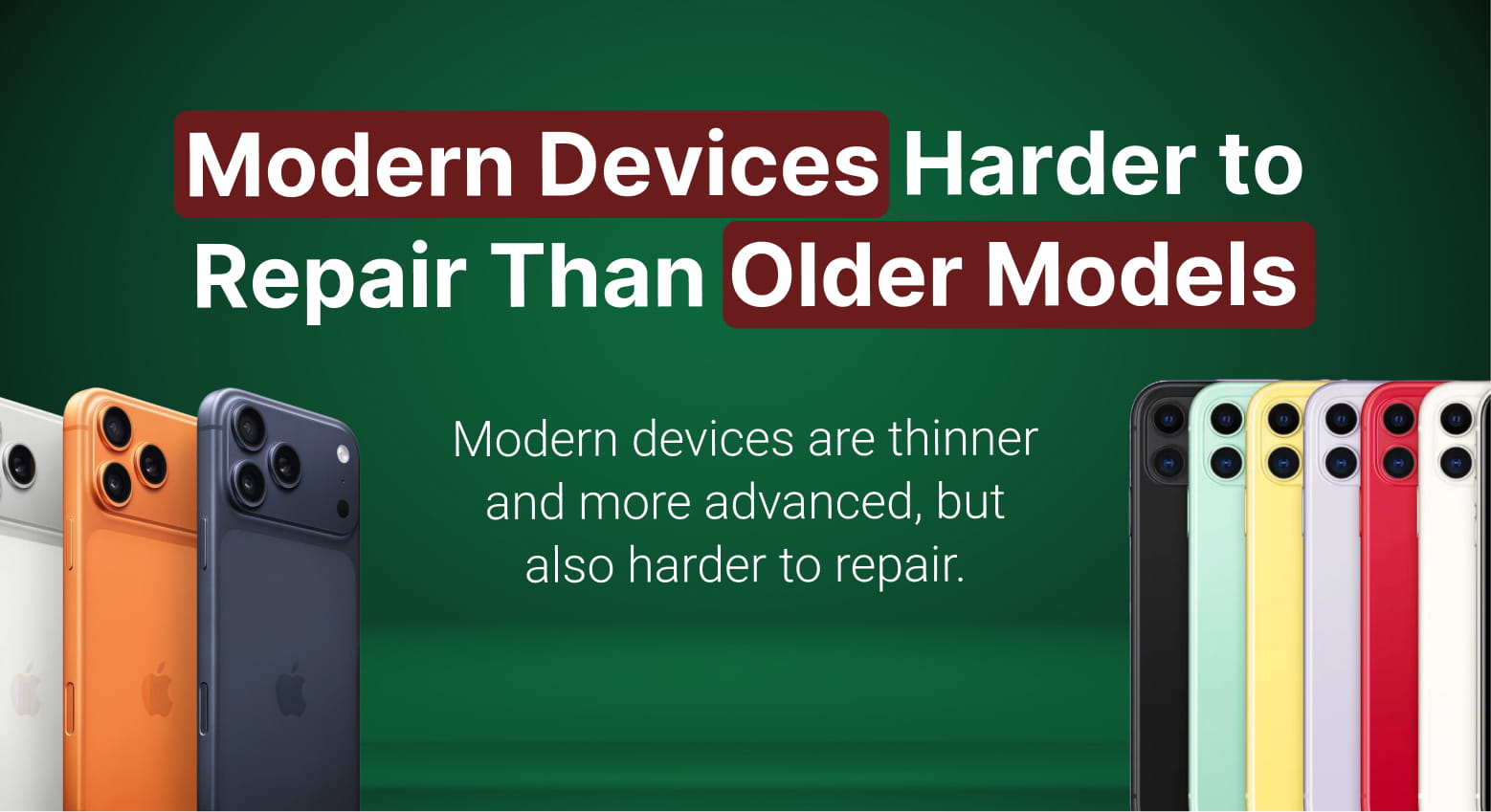
Modern smartphones, laptops, tablets, and gaming consoles are more powerful than ever. However, as technology advances, device repair has become significantly more complex. Compared to older models, today’s devices require specialized tools, professional experience, and precise handling to avoid permanent damage.
Understanding why modern devices are harder to repair helps users make smarter decisions about maintenance, protection, and professional repair services.
Ultra-Thin Design Creates Repair Challenges
One of the biggest reasons modern devices are harder to repair is their ultra-thin design. Manufacturers prioritize slim profiles and lightweight materials, which leaves little internal space between components.
In older devices, parts were spaced out and easier to access. Today, even a simple battery or screen repair can involve removing multiple sensitive components, increasing the risk of accidental damage.

Extensive Use of Industrial Adhesives
Modern devices rely heavily on strong adhesives instead of screws. Displays, batteries, and frames are often glued together to improve water resistance and reduce thickness.
While this improves durability for daily use, it makes disassembly more dangerous. Excessive heat or pressure during removal can crack screens, tear cables, or bend internal frames.
Highly Integrated Internal Components
Many modern devices use layered or integrated parts. Screens may include biometric sensors, speakers, and cables bonded into one assembly. Batteries are often placed beneath critical logic boards or cooling systems.
This integration means replacing one damaged part often requires removing several others first, increasing repair time and complexity.

Software Pairing and Security Restrictions
Modern smartphones and laptops use advanced security features to protect user data. While this improves privacy, it also adds challenges to repairs.
Some components require software pairing or calibration after replacement. Without proper tools, features such as cameras, fingerprint sensors, or battery health readings may not function correctly after repair.
Fragile Materials Increase Risk During Repair
Glass backs, ceramic coatings, and ultra-thin flex cables are now standard in modern devices. These materials improve aesthetics and performance but are more fragile than older plastic components.
A small slip during repair can result in cracked glass or torn cables that are difficult and expensive to replace.
Limited Access to Genuine Replacement Parts
Manufacturers now tightly control the distribution of genuine parts. This limits availability and increases the importance of sourcing high-quality components.
Using low-grade or incompatible parts can lead to overheating, performance issues, or shortened device lifespan.
Why Professional Repair Is More Important Than Ever
Due to these design and security changes, professional repair services offer clear advantages. Trained technicians use proper tools, correct procedures, and tested parts to complete repairs safely.
Modern devices deliver incredible performance and sleek design, but at the cost of repair complexity. Thin construction, sealed components, software restrictions, and fragile materials all contribute to making repairs more demanding than in the past. Choosing proper device care and professional repair services helps protect your investment and extend the life of your device.
