
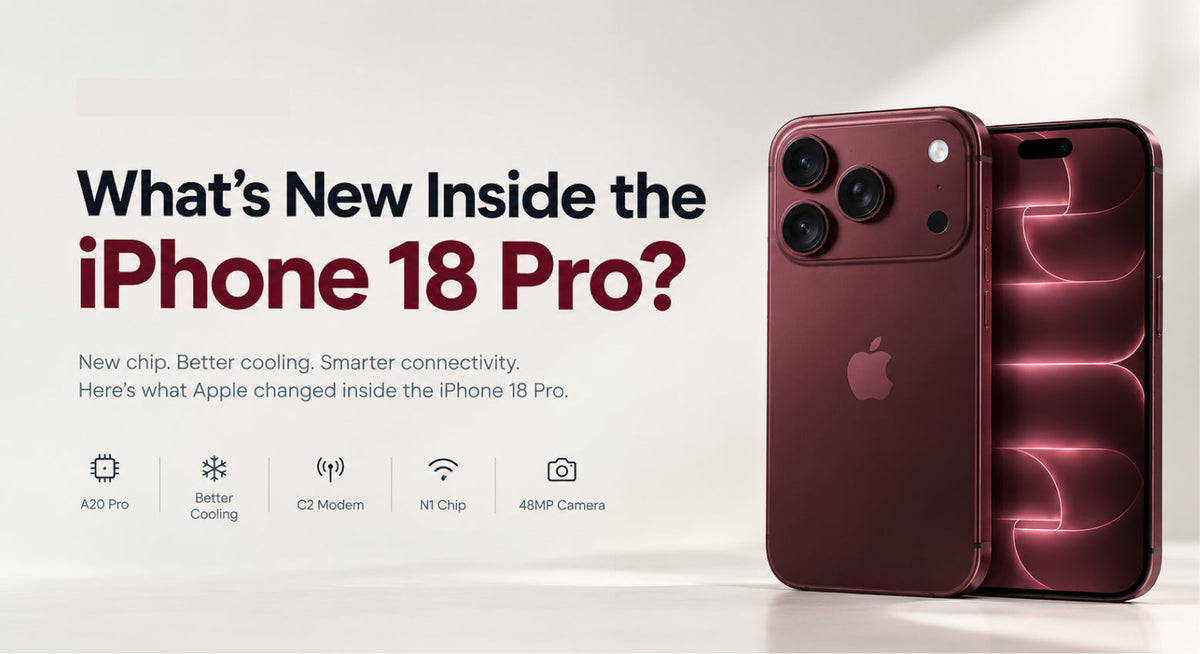
The iPhone 18 Pro brings more than a new camera and updated design. Apple has made several important changes inside the phone, including a new A20 Pro chip, redesigned chip packaging, a larger vapor chamber, new wireless hardware, and a new C2 cellular modem.
These internal upgrades are designed to improve performance, cooling, connectivity, battery life, and on-device AI.
A20 Pro Chip Brings a Major Internal Upgrade
The biggest change inside the iPhone 18 Pro is the new A20 Pro chip. It uses a 2-nanometer process and includes a 6-core CPU, 7-core GPU, and a new Dual 16-core Neural Engine.
Apple says the A20 Pro also has 50% more memory bandwidth than the previous generation. This gives the phone more processing power for demanding games, advanced camera processing, and on-device AI.
The chip also uses packaging inspired by Apple's M-series processors. The silicon and memory are positioned side by side instead of placing the memory directly in the chip's thermal path. This helps move heat away from the processor.
A Much Larger Vapor Chamber
The iPhone 18 Pro also has a redesigned vapor chamber for cooling.
The new vapor chamber has three times the surface area of the one used in the iPhone 17 Pro. It works with new thermal materials and the A20 Pro packaging to move heat away from the processor more effectively.
This matters most during demanding tasks such as gaming, video processing, and running larger AI models. Apple says the new thermal system can provide up to 40% better sustained performance compared with the iPhone 17 Pro.
New C2 Cellular Modem
The C2 is designed to improve cellular quality and reliability while using less energy. Apple says it provides meaningfully faster uploads compared with the previous C1X modem and uses 15% less energy. It also supports mmWave in the United States.
For everyday users, this can affect mobile data performance, upload speeds, and battery efficiency when using cellular networks.
New N1 Wireless Chip
The iPhone 18 Pro also includes Apple's N1 wireless networking chip.
It handles several wireless technologies, including Wi-Fi 7, Bluetooth 6, and Thread. Moving these functions into a newer Apple-designed wireless chip helps support the phone's updated connectivity system.
The Camera Hardware Has Changed Too
The internal camera hardware is also different. The iPhone 18 Pro introduces a 48MP Fusion Main camera with variable aperture.
Unlike a fixed-aperture camera, the new system can adjust the aperture to control how much light enters the lens. This gives the camera more control over exposure and depth of field.
Apple has also added new Pro camera controls for features such as aperture, shutter speed, and white balance.
What These Internal Changes Mean for Users
The hardware changes inside the iPhone 18 Pro are not just about making the phone faster on a benchmark.
The A20 Pro provides more processing power, while the larger vapor chamber helps the phone maintain performance during demanding workloads. The C2 modem and N1 chip update connectivity, while the new camera hardware adds more control over photography.
For people who use their iPhone for gaming, video recording, photography, AI features, or other demanding tasks, these internal changes can have a noticeable effect on how the phone performs over longer periods.
iPhone 18 Pro Has More Than a New Design
The iPhone 18 Pro may look familiar from the outside, but Apple has made significant changes inside the device.
The A20 Pro chip, redesigned thermal system, larger vapor chamber, C2 modem, N1 wireless chip, and updated camera hardware all work together to improve performance and efficiency.
For a phone repair shop, these changes are also important because newer internal designs can make diagnosis and repair more specialized. If an iPhone 18 Pro develops a charging, overheating, camera, battery, or performance problem, the issue may involve components that are very different from previous iPhone generations.
